Nourishing and Reimagining Collaboration, Conservation, and Collaboration
After a three-year hiatus, the Virginia Farm to Table Conference returned to explore the theme “Nourishing and Reimagining Collaboration, Conservation, and Collaboration.”
Virginia Cooperative Extension hosted the conference December 12-13, 2024 in partnership with the Virginia Soil Health Coalition, the VT Center for Food Systems and Community Transformation, USDA’s Natural Resources Conservation Service, Virginia Beginning Farmer and Rancher Coalition, Virginia Sustainable Agriculture Research Education (SARE), Blue Ridge Community College, and community partners.
Conference topics included presentations, conversations, and discussions around regenerative agriculture, safety trauma, drought resilience, managing pasture, local and regional food system development, community food webs and clusters, connections between soil health and human health, diversifying and stacking complementary enterprises, and value chain connections and market development where producers and practitioners share their local and regional expertise and perspectives.
Learn more about the speakers who joined us below.
Speakers
Speakers included Dr. Elizabeth Heilman of Wichita State University, Dale Strickler, farmer, advisor of AgSpire, and author of the Drought Resilient Farm and the Complete Guide to Restoring Your Soil, Dr. Gail Myers of Farm to Grow and director of Rhythms of the Land, Daniel Austin of Green Sprig Ag and Little Red Hen Farm, David Montgomery and Anne Biklé authors of What Your Food Ate, Ken Meter of Crossroads Resource Center and author of Building Community Food Webs, Pedro Aponte of Saint Isidore Homestead & Permaculture, Social Impact Studios, and others.
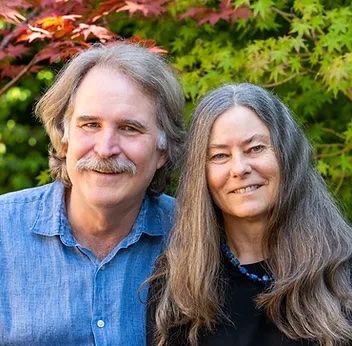
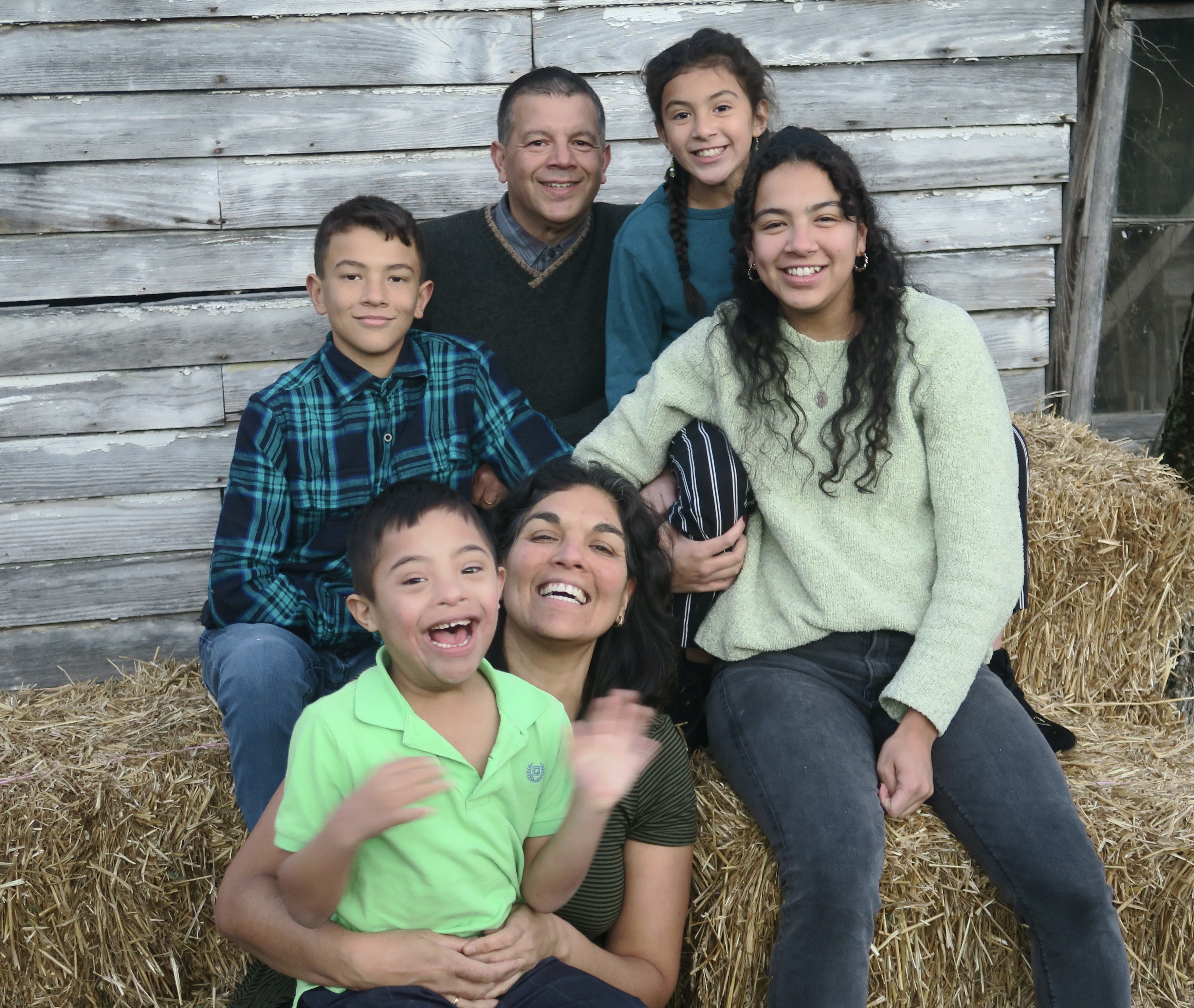
Dr. Elizabeth Heilman is a Professor in the School of Education at Wichita State University and co-founder of Regenerative Wisdom. Dr. Heilman and her husband Dale Strickler live in Iola, Kansas a short distance from Dale’s family farm. Dr. Heilman researches how the most socially powerful belief systems are formed and the psychological, cultural, and political factors that shape them. Her current work focuses on what is most needed educationally and socially to foster sustainable human flourishing, which includes understanding the connection to environmental ecology, emotional ecology, regenerative agriculture, and food systems. Dr. Heilman will also discuss the concept of safety trauma as a form of emotional ecology and how that shapes adoption and implementation of change behaviors and everyday practices. Dr. Heilman wrote a recent article for the Green Cover Soil Health Resource Guide titled “Regenerative Agriculture: The Secret to Farmer Happiness.”Dale Strickler is an internationally recognized agronomist, agroecologist, speaker and consultant with more than 30 years of experience in agronomy, pasture management, and soil and crop advising. While working in academia as well as in private industry, he has developed highly effective crop and grazing systems for numerous farms and ranches with a range of often challenging climates and soil types. Dale has consulted in every region of the USA and as far away as Hungary and South Africa. Dale and his wife, Dr. Elizabeth Heilman, founded the consulting business Regenerative Wisdom. Dale is the author of the best-selling books, The Drought Resilient Farm, Managing Pasture, and The Complete Guide to Restoring Your Soil, which was named a top ten farming book by Modern Farmer. Dale can be found in numerous YouTube videos and podcasts and his articles have appeared in publications like Mother Earth News, Acres USA, Stockman Grass Farmer, and Grit. Dale started his own ranch and farm in 1997 over the years, tested and refined his techniques for optimal land management, earning awards, such as the 2013 Water and Energy Progress Award Model of Innovation from the State of Kansas, the Kansas Farm Bureau Natural Resources Award in 2015, and the 2014 Kansas Bankers Association Conservation Program Water Conservation Award. Dr. Gail P. Myers is a Cultural Anthropologist, Farmer, and Film Director. In 2000, while a doctoral student at The Ohio State University, she organized the first statewide conference for African American Farmers, Sustaining Communities: African American Farmers at the Crossroads. In 2004, Dr. Myers co-founded Farms to Grow, Inc. in Oakland, CA to work in partnership with African American farmers and other farmers of color to sustain their farms. Dr. Gail works in collaboration with various grassroots and coalition based organizations locally and globally. In 2018, she received the Advocate for Social Justice Award “Justie” from the Eco-Farm Association. Currently, Dr. Myers teaches, consults, and serves on several board of directors, and travels around the country screening her first documentary, Rhythms of the Land. Dr. Myers started the documentary project in 2012 and toured 10 southern states — Texas, Arkansas, South Carolina, North Carolina, Louisiana, Alabama, Mississippi, Georgia, Tennessee and Florida – to interview over 30 farmers, sharecroppers, gardeners, and a 5th generation coil basket weaver. Several of the interviews were with elders ranging in ages from 92 to 109. These interviews represent generations of cultural traditions of Black farming philosophy that honors land, sustainability, God, family and love for their community.Dr. David Montgomery is a professor of Earth and Space Sciences at the University of Washington. Anne Biklé attended the University of California, Santa Cruz earning degrees in Biology and Natural History. She holds a Master’s Degree in Landscape Architecture from the University of California, Berkeley. Anne’s career has included work in biology, watershed restoration, environmental planning, and public health.Daniel Austin is a fifth-generation farmer in Franklin County and shares the history of how his interest and passion for soil health started with a loathe of picking up rocks and erosion. In a nutshell, he and his family grow, process, and package local grains (wheat, spelt, buckwheat, and open-pollinated corn) for as direct farm-to-table sales to families, bakers, millers, and brewers as possible. Additional enterprises of Little Red Hen Farm and Green Sprig Ag include a flock of sheep to graze on the rolling hills and the selling of cover crop seeds for food, feed, and conservation. Green Sprig Ag tailors cover crop sales to address farmers’ and growers’ resource concerns and priorities.Ken Meter is one of the most experienced food system analysts in the U.S., integrating market analysis, business development, systems thinking, and social concerns. Meter holds 50 years of experience in inner-city and rural community capacity building. His local economic analyses have promoted local food networks in 144 regions in 41 states, two provinces, and 4 tribal nations. He developed a $9.85-milllion plan for local food investment for the state of South Carolina, and completed similar studies for New Mexico, New Hampshire, Hawai‘i, Alaska, Mississippi, Indiana, Ohio, and Minnesota. He developed strategic regional food plans for nearly 20 regions across the U.S. Meter consulted with the USDA Agricultural Marketing Service and Colorado State University as one of 14 co-authors of a toolkit for measuring economic impacts of local food development. He is author of Building Community Food Webs, published by Island Press in 2021. He is one of 3 co-editors of Sustainable Food System Assessment: Lessons from Global Practice, published by Routledge (UK) in 2019. Meter is also a member of the International Economic Development Council, where he presented at several annual meetings. He has taught at the Harvard Kennedy School and the University of Minnesota.Dr. Heather Coiner is a founding member of the Common Grain Alliance and served as Chair between 2018-2021. She holds a PhD in plant physiological ecology from the University of Toronto, and co-owns Little Hat Creek Farm, an ecological vegetable farm and wood-fired bakery in central Virginia where she lives with her husband and three children. As CGA’s Southern SARE Grant Project Manager, she is the primary contributor to the Growing Grain blog and is leading the development of a modular curriculum for growing food grain for the Mid-Atlantic market.Dr. Pedro Aponte is associate professor of musicology and musicology area coordinator at James Madison University. With his family, he also runs Saint Isidore Homestead and Permaculture.
Dr. Aponte’s areas of research include Latin American art music, musical nationalism, music in society, and cultural studies. A recipient of the William and Flora Hewlett Foundation Field Research Grant (2000) and the Tinker Foundation, Inc. Field Trip Grant (2003), Dr. Aponte has presented his research at various conferences including the American Musicological Society, the Society for Ethnomusicology, and the Latin American Studies Association. He has published in scholarly journals such as Intercultural Musicology and International Jazz Archives Journal.
Dr. Aponte is a former member of the Gran Mariscal de Ayacucho Symphony Orchestra in Caracas, Venezuela, where he played flute and piccolo for six years. In the U.S. he has played with the Roanoke and Altoona Symphony Orchestras. Dr. Aponte is also an active performer of historical flutes and early music.
Special Screening: Rhythms of the Land
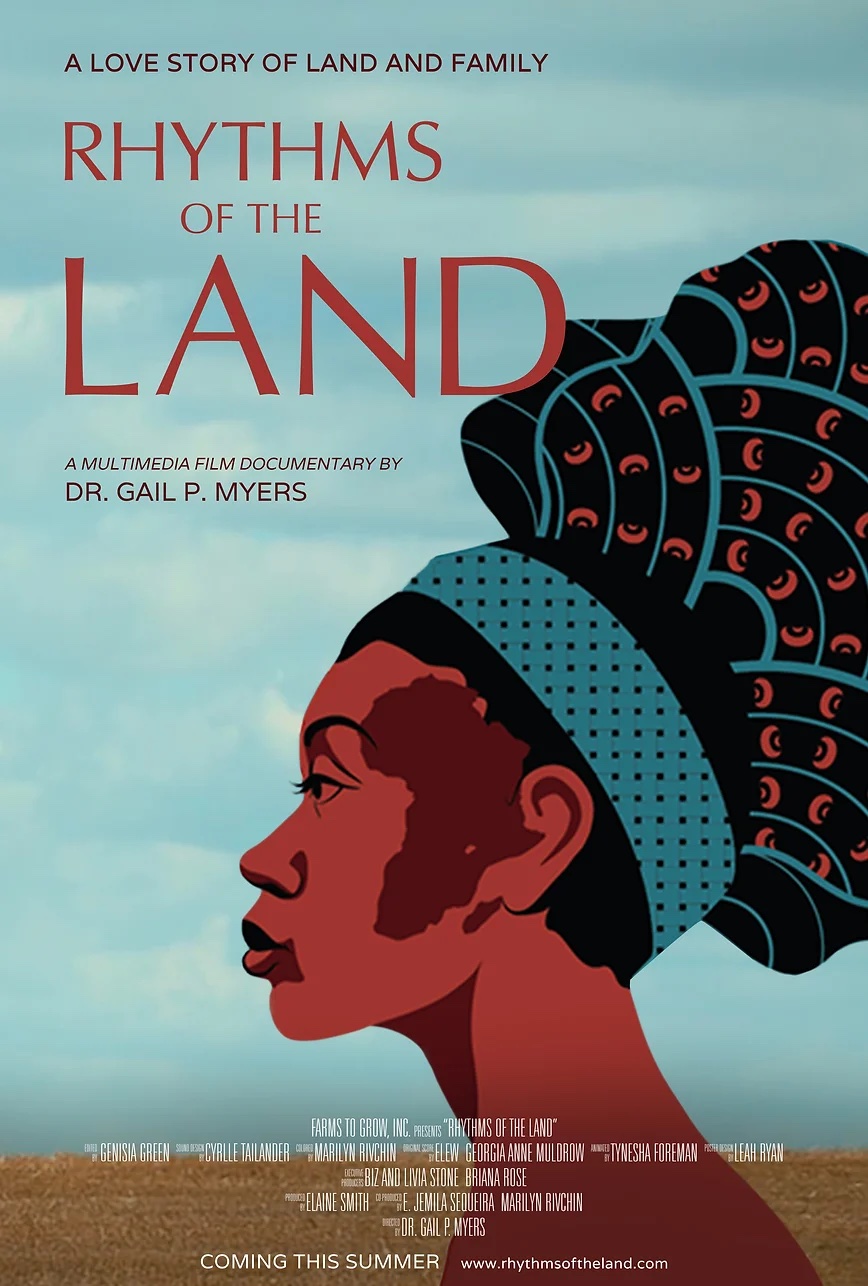
On Tuesday afternoon, we were honored to host a special exclusive screening of Rhythms of the Land, a multimedia documentary film directed by Dr. Gail Myers, a cultural anthropologist, farmer, and co-founder of Farms to Grow Inc.




 Virginia Farm to Table